
Questions
What Information Should I Leave for a Babysitter?
At minimum, a babysitter needs emergency contacts (you, a backup adult, and the pediatrician), any allergies or medications and how to handle them, the house and wifi basics, bedtime and routine notes, and a clear way to reach you. A fixed printed list covers one evening well, but it goes stale the moment plans change — a later pickup, a new allergy, a different bedtime — which is the main reason people search for something better than a printable template. This is a logistics checklist, not medical or safety advice; use your own judgment and any relevant emergency guidance alongside it.
The core information every sitter needs
- Emergency contacts: you, a backup adult who can respond quickly, and the pediatrician's number.
- Allergies and medications: what they are, what to do if a reaction happens, and any medication timing.
- House basics: wifi password, alarm code, where the first-aid kit is, and any doors or areas that are off-limits.
- Bedtime and routine: the actual sequence a child expects, not just a bedtime, since routine deviations are often what cause an evening to go sideways.
- How and when to reach you: your expected return time and how you'd like to be contacted for something non-urgent versus urgent.
Why printable templates go stale
Search results for this topic are dominated by printable templates — titles like "Free Printable Babysitter's Information Guide," "Babysitting Checklist (Free Printable)," and "The Ultimate Grandparents' Emergency Babysitting Checklist" recur across many sites, which shows how strongly people want a fill-in-the-blank sheet rather than a philosophy of what to include. The problem with a printed sheet is that it's accurate exactly once: the day it's printed. A new allergy, a changed pickup time, or a different emergency contact means either re-printing or, more often, telling the sitter verbally and hoping it's remembered.
Making it something the sitter can actually check mid-visit
The fix isn't a better template, it's a living version of the same information that updates the moment something changes and that the sitter can check on their own without a phone call. That means the sitter needs access to current information without necessarily needing to install an app themselves — a share link they can open once is a lower-friction ask than an account signup for someone helping out for one evening.
How grandparents fit in differently than a paid sitter
A grandparent or regular family helper covering care is a different case than a one-off paid sitter: they're likely to help repeatedly, so a durable, always-current version of the same information is worth more to them than a one-time printout, and they may already know the house and routine well enough that only the changed details (a new allergy, a schedule shift) actually need flagging each time. The search pattern around this topic includes dedicated grandparent-specific checklists for exactly this reason — a distinct document called out separately from the general babysitter sheet, because a grandparent covering a weekend is doing something closer to running the household than watching it for three hours.
Care coverage the sitter can check without installing anything
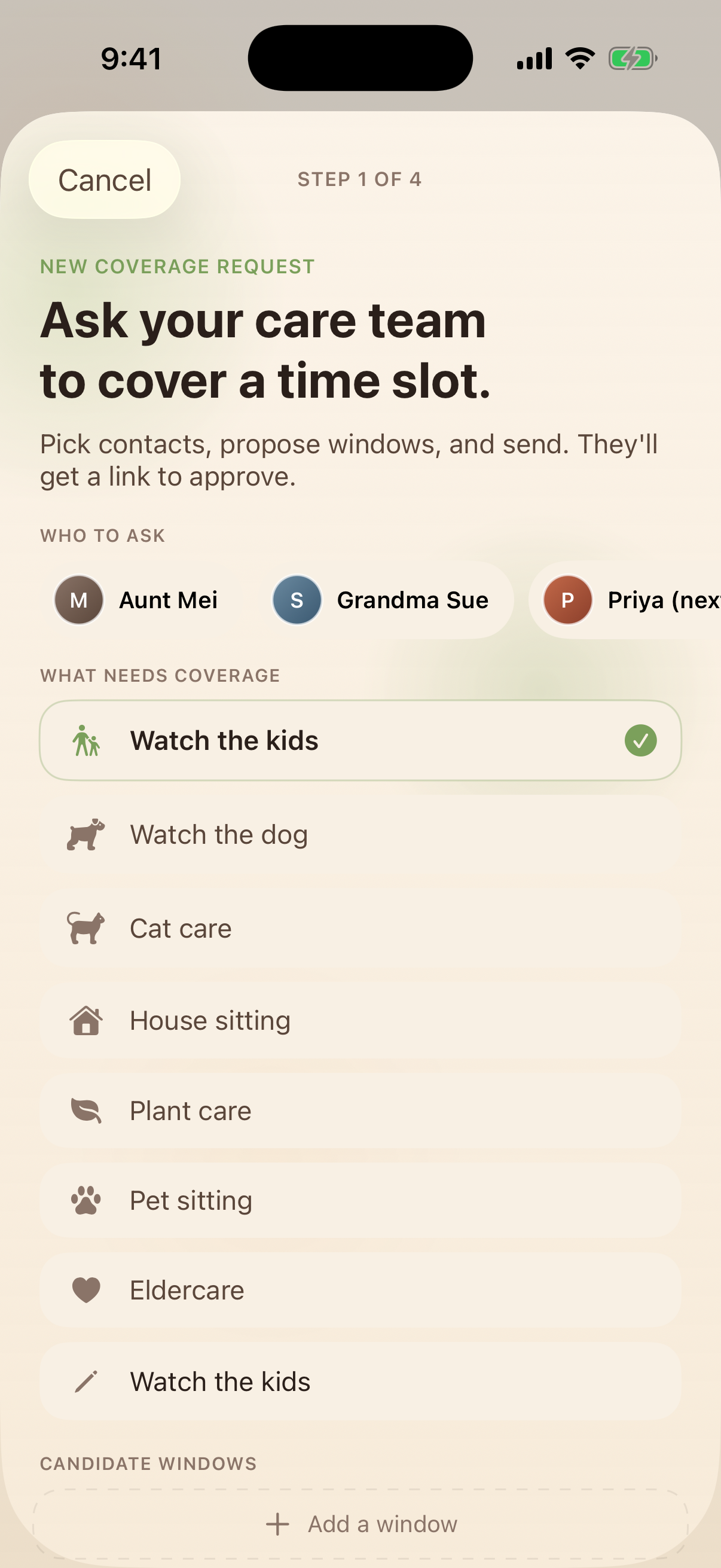
Kinrows lets you ask your care network for babysitting, pet, or house coverage with proposed time windows, which helpers can approve via a share link with no app install required, or in-app if they're already a household member. Combined with People profiles and shareable Notes, the same information a printed sheet would carry — routines, contacts, current details — stays current and reachable without a fresh printout each time. This organizes logistics and approvals; it isn't a safety-critical system and doesn't replace your own emergency planning.
Frequently asked questions
What should be on a babysitter information sheet?
Emergency contacts, allergies and medications with instructions, house basics like wifi and alarm codes, the actual bedtime routine, and how to reach you. Treat it as a logistics checklist, not a substitute for your own judgment or emergency guidance.
What do I need to tell a new babysitter before they arrive?
Beyond the written sheet, walk through anything that's easy to miss in writing: where things physically are (first-aid kit, flashlight, fuse box), any household quirks, and what counts as an emergency worth calling you immediately about versus waiting.
Is a printable babysitter sheet good enough?
For a single evening with no last-minute changes, yes. The gap shows up when something changes after it's printed — a new allergy, a later pickup — since the sitter is then working from outdated information unless someone remembers to tell them verbally.